 Rug tufting field guides
Setup · Shared spaces
Can you tuft rugs in an apartment?
You can plan a station for a shared building, but do not assume it will be quiet or that an adhesive is suitable indoors. Check frame movement, the product label and safety sheet, and how you will collect loose fibers before starting.
Last reviewed: October 14, 2026.
Separate machine noise from frame vibration
A quieter motor does not tell you how much movement the frame and table pass into the floor or wall.
Start with the station. Tighten or remove loose parts that rattle, check that the frame and table stay still under normal pressure, and leave space between the frame and shared walls. Use the frame maker's instructions for its supports and clamps. If the setup shifts, stop and correct it before running the gun.
Try a short session at a time allowed by your building, then check what can be heard outside the room. Ask a neighbor or household member instead of treating wall panels or a different gun as proof that the sound is contained.
Use the frame mounting guide to check gripper direction and support.
Check adhesive instructions before using it indoors
A low-VOC label is not, by itself, permission to use a product in a closed apartment room.
Read the current product label and safety data sheet for the exact adhesive. If your apartment cannot meet those ventilation and ignition controls, do not use the product there.
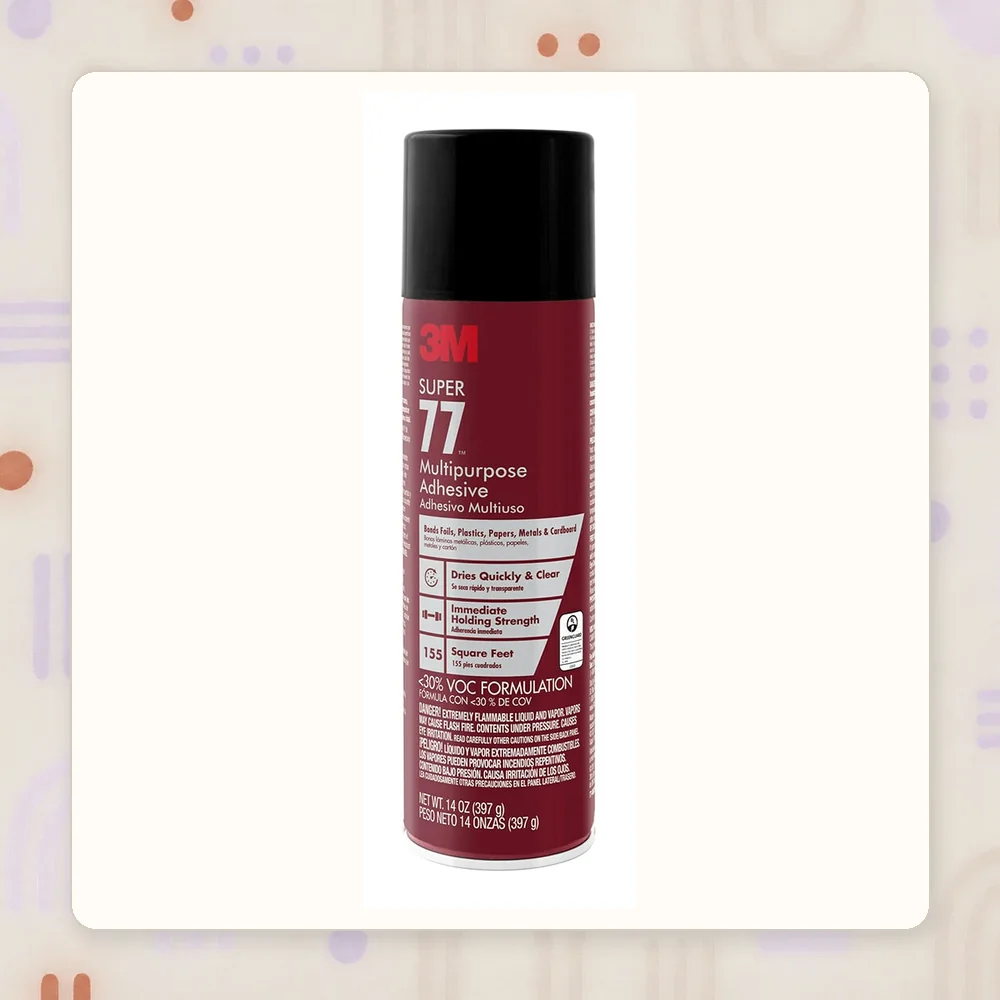
3M Super 77 is a backing-fabric spray, not a tuft-locking coat. 3M marks it for industrial or occupational use only, not consumer sale or use. A flooring adhesive such as Roberts 3095 stays unlinked here because its data sheet does not establish tufted-rug use.
Spray adhesive · backing fabric
3M Super 77 Multipurpose Spray Adhesive, Low VOC
A backing-fabric reference when the current label covers the fabric. It is not a tuft-locking coat, and 3M marks this formulation for industrial or occupational use only, not consumer sale or use.
Apartment check: Use it indoors only if the current label and safety data sheet allow the setting and you can meet their ventilation and ignition controls. Otherwise leave spray adhesive for another workspace.
The ROBERTS 3095 product data sheet describes carpet installation and calls for adequate ventilation. It does not establish a tufting use or a wet-press method for craft rugs. Do not treat a flooring adhesive as suitable for a tufted rug unless its manufacturer confirms the materials and method.
For the broader distinction between tuft-locking adhesive and backing adhesive, see the adhesive guide. If the exact instructions do not fit your room and materials, leave the adhesive step for a workspace that does.
Keep loose fibers from spreading
Put a washable cover under the work area and collect clippings as you go. Avoid blowing fibers around or dry sweeping them back into the room. Follow the carving tool's instructions for guards, collection, and protective equipment; stop if your cleanup plan depends on leaving fibers in shared space.
The carving tools guide explains what to check before adding a powered trimmer to a small workspace.
Apartment setup check
- Confirm the frame and table stay stable before using the gun.
- Keep the station clear of shared walls and remove loose parts that rattle.
- Read the exact adhesive label and safety sheet before opening it.
- Have a cleanup plan for yarn clippings before trimming a rug.
- Check building rules and quiet hours, then ask whether the sound carries.
What should you read next?
Apartment tufting FAQ
Will a quieter tufting gun stop noise from reaching a neighbor?
Not necessarily. Motor sound and vibration carried by the frame or table are different issues. Check the whole station and ask someone outside the room whether the sound carries.
Can I use spray adhesive in an apartment?
Only if the exact product label and safety sheet permit the setting and you can meet their ventilation and ignition controls. For 3M Super 77, that includes the industrial-use limit on the current label.
How do I keep yarn fibers out of the apartment?
Cover the work area, collect clippings as you go, and follow the trimming tool's instructions for cleanup and protective equipment. Do not blow fibers around or dry sweep them into shared space.