 Rug tufting field guides
Finishing · Backing and detail
How should you finish a tufted rug?
Choose the finish for where the piece will go. Keep the cloth stretched while the primary adhesive cures, finish the edge and backing, then trim or carve the pile if the surface needs it.
Last reviewed: October 14, 2026.
Choose a finish for the piece
A floor rug needs a backing and edge suited to floor use. A wall piece and a practice sample may not need the same layers.
| Where it will go | Plan for | What can wait |
|---|---|---|
| Floor rug | Lock the yarn to the primary cloth, finish the raw edge, and choose a secondary backing intended for floor use. | Decorative carving is optional. Finish the backing and edge before adding surface detail. |
| Wall piece | Secure the yarn and cover or finish the back and raw edge in a way that suits the hanging method. | Skip a floor-grip layer unless the piece will also be used on the floor. |
| Practice sample | Use the sample to check pile and the chosen adhesive instructions. | Skip a decorative edge and secondary backing if the sample is only for practice. |
Keep the finishing order simple
- Inspect the piece while it is stretched. Fix missed yarn or shape issues before the primary cloth comes off the frame.
- Apply the primary adhesive for its labeled use. Work it into the tufted area according to the product instructions, then let it cure while the cloth is still held in place.
- Remove the piece after the adhesive has cured. Finish the raw cloth edge using a method supported by the material makers. See Tuft the World's edge-finishing guide.
- Add secondary backing if the end use calls for it. Check that the backing and adhesive instructions cover the materials you are joining. The adhesive guide separates tuft lock, secondary backing, and edge work.
- Trim or carve after the backing work is ready. Use scissors for small stray ends. Before using a guide, check the exact carver and guide pairing on the carver guide.
Check the label before choosing an adhesive
Primary tuft-lock, secondary backing, and edge work are separate jobs. Use a product only when its current label and safety data cover the material and step you plan to use it for. Cure time, ventilation, cleanup, and handling come from those instructions.
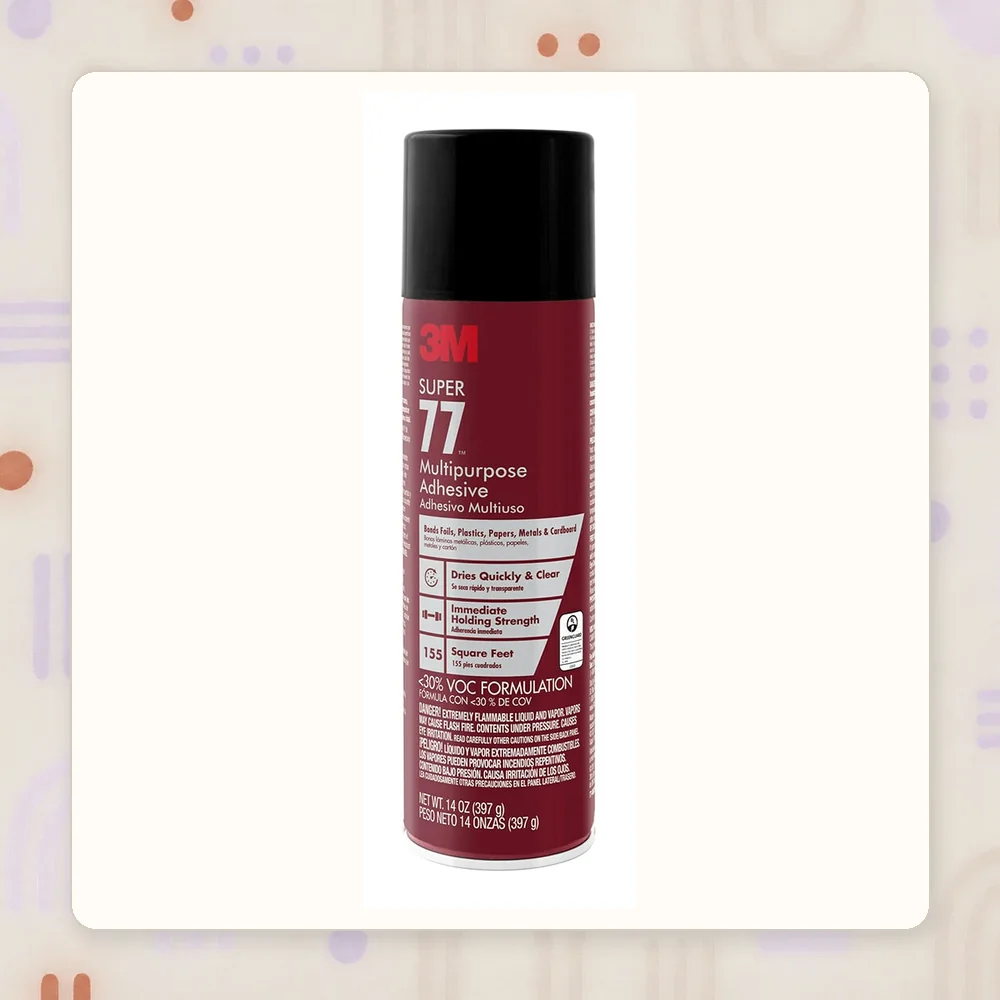
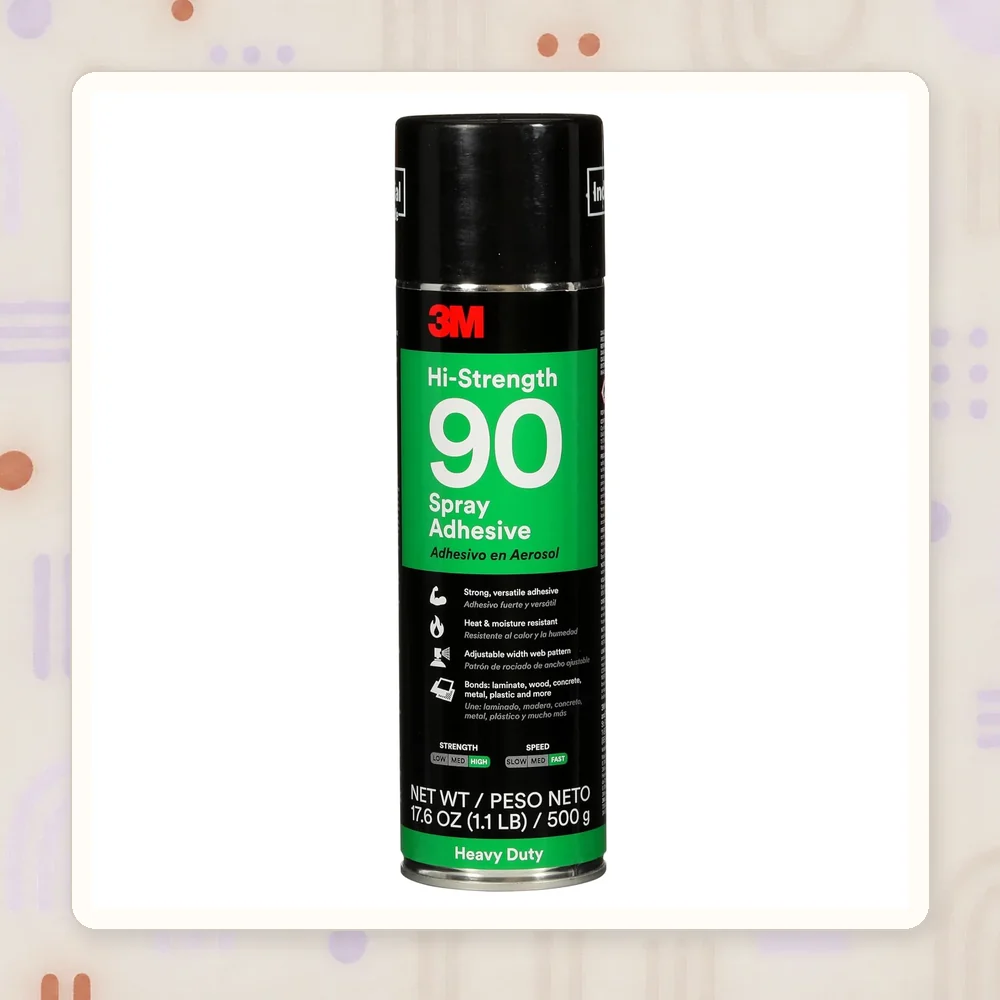
3M Super 77 and Hi-Strength 90 are backing-fabric references, not tuft-locking coats. 3M marks them for industrial or occupational use only, not consumer sale or use.
Spray adhesive · backing fabric
3M Super 77 Multipurpose Spray Adhesive, Low VOC
A backing-fabric reference when the current label covers the fabric. It is not a tuft-locking coat. 3M marks it for industrial or occupational use only, not consumer sale or use.
Check before buying: Read the 3M product page and safety data sheet.
Spray adhesive · product reference
3M Hi-Strength 90 Contact Spray Adhesive
Another backing-fabric reference when the current label covers the fabric. Confirm the can size on the live listing. See the 3M Hi-Strength 90 product page.
Listing held
Hot glue gun
Product link withheld. Glue-gun listings stay off this site until a listing and a manufacturer sheet substantiate textile or rug-edge use.
For the broader process, see adhesive jobs and safety and backing choices.
What to read next
- Choose tools by the job if you need a transfer, edge, or trimming option.
- Review studio bottlenecks before adding equipment.
- Check the first-rug station if you are still gathering core supplies.
- Waterfall edge and backing for folds, tape, and curves.
- Roberts 3095 vs 3000 for the flooring-sheet limits.
- Scissors, carver, or planer when the pile needs a defined trim.