 Rug tufting field guides
Guns · Maintenance
How often should you oil and clean a tufting gun?
Clear lint after each session, and oil the points named in your exact gun's manual on its stated schedule. Replace a cutting scissor when it chews yarn instead of cutting; WD-40 is a solvent and water displacer, not a lubricant for sliding parts.
Last reviewed: October 30, 2026.
Start with the manual for your gun
Cut-pile and loop-pile guns have different moving parts, and even two cut-pile models may use different oil points. Use the manual for your exact model before you open the head or choose an interval.
If you cannot identify the model, check its label or ask the seller before ordering a cutter. For a general choice of lubricant, see what oil to use on a tufting gun.
Where to oil the gun
Oil only the points your manual names. Use the table to identify them; oil points vary by model.
| Component | What it does | How much | What to avoid |
|---|---|---|---|
| Linear bearings or guide rails, if listed | Guide the moving assembly through its stroke. | Use only the amount and interval named in the manual, then wipe visible excess. | Do not spray across the head or oil every visible joint by guesswork. |
| Scissor pivot, on cut-pile guns if listed | Lets the cutting scissor open and close. | Apply only at the named point and in the amount the manual gives. | Do not oil the blade edges unless the manual says to. |
| Gear, crank, or other joints, if listed | Transfer motion through the drive. | Follow the model's instructions; ask the maker if they do not give an amount. | Do not pack the head with grease unless the manual calls for it. |
Which oil to use
Use the lubricant named in your manual; recommendations differ by model. The oil choice guide explains what to check.
Clear lint after a session
- Switch the gun off and unplug it. Follow the manual's access instructions.
- Remove loose fibers around the accessible head with a soft brush.
- Use compressed air only if your manual allows it, and avoid pushing lint farther into the mechanism.
Clear fuzz from the cloth, frame, and work area separately. A scraper can help with the work area, but it is not for the inside of the gun head.
Signs the cutting scissor needs attention
- Yarn ends look chewed.
- Loops stay uncut.
- The gun pulls yarn.
These can point to a dull or damaged scissor. Stop and check that the machine is set for cut pile before you assume the blade is worn.
Use the not-cutting troubleshooting guide to separate a blade problem from a setting or mechanism issue.
Replace the scissor safely
- Switch the gun off and unplug it before opening or servicing the head.
- Match the replacement scissor to your exact gun model, then follow that model's fitting and alignment steps.
Do not loosen parts or copy an adjustment from another gun. If the manual does not show how to change the cutter, ask the maker or seller. If yarn is slipping or jamming rather than staying uncut, check the yarn feed troubleshooting guide.
A maintenance schedule to print
Use this as a reminder, but follow your model's manual for oiling intervals. A weekly check is a common starting point for regular use; it does not mean every gun needs weekly oil.
| When | What to do |
|---|---|
| After each session | Switch off and unplug. Clear loose lint from the accessible head, then clean the cloth and work area. Wipe away visible excess oil. |
| Weekly, if you tuft regularly | Check the manual's oil interval and inspect accessible moving parts for lint or visible wear. Oil only if the model's schedule says it is due. |
| When symptoms appear | Stop and unplug. Check the manual and cutting mode; investigate chewed ends or uncut loops before returning to work. |
What to buy
Confirm the exact gun model before buying a replacement scissor. Hand scissors can trim stray yarn tails, but they cannot replace the gun's cutter. See the tufting gun guide for help choosing a gun.
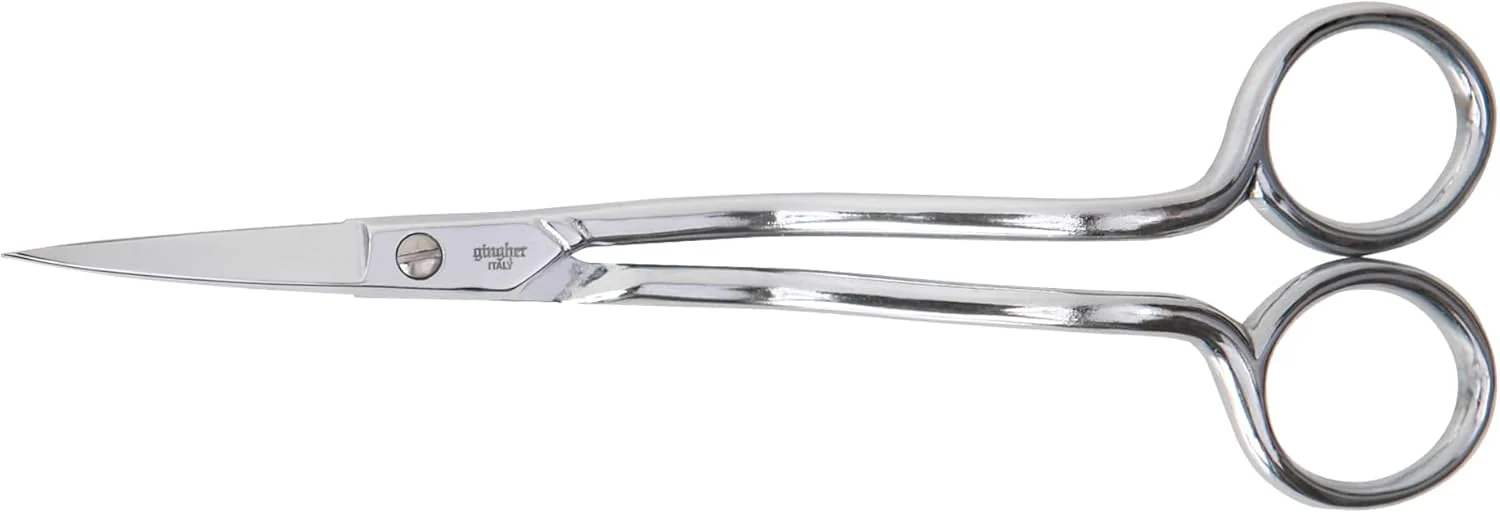
Gingher 6-inch double-curved scissors
Trim stray yarn tails around the gun head with these scissors. They do not replace the gun's cutter.
Best for: stray yarn tails around the gun head.
Skip if: you need a replacement for the gun's cutter.
Uproot Clean Pro carpet scraper
Use it to lift lint and pet-hair-style fuzz from tufting cloth, mats, upholstery, and clothes. Keep it out of the gun head; use a soft brush or compressed air there. It is reusable and needs no batteries or sticky sheets.
Best for: hand-cleaning tufting cloth and the work area.
Skip if: the fabric is loose-knit or delicate enough to snag, or you only need to clean the gun head.
Frequently asked questions
Can I use WD-40 on a tufting gun?
Avoid it. It is not made for lasting lubrication and can attract lint. Use the oil named in your manual.
How do I know the scissor is dull?
Cut ends look chewed, some loops stay uncut, or the gun pulls yarn.
Do loop-pile guns need the same care?
They have no cutting scissor, but the moving parts still need lint cleared and lubricated.
How much oil should I use?
Use the amount your manual specifies, then wipe away excess.
Can I sharpen the cutting scissor?
Only if the maker says so. Otherwise replace it with the matching part.