 Rug tufting field guides
Materials · Yarn
How to wind yarn and set up a smooth tufting-gun feed
A cone or yarn feeder can make the supply easier to manage. If you start with a ball, skein, or hank, wind it onto a cone and set the feed path so yarn moves without snagging.
Last reviewed: October 14, 2026.
Choose a supply that unwinds freely
Prewound cones can go on a feeder as they are. Tuft the World’s yarn guide recommends rewinding yarn sold as a ball, skein, or hank onto a cone; it says balls can bounce, snag, and create uneven tension.
A winder helps with that transfer, but it is optional if you buy yarn already wound on a cone. Use the yarn maker’s and machine maker’s instructions for the supply and feed path you choose.
Winder purchase links are withheld until a current listing confirms capacity and a buyable offer.
For the amount of yarn to buy, start with the sample-based yarn guide. The tool guide compares yarn handling with other station jobs.
Wind a skein onto a cone
- Check the yarn label and the winder instructions before starting.
- Keep the skein from twisting or collapsing as it feeds into the winder. Stop if the yarn catches or begins to knot.
- Guide the yarn evenly onto the cone, then test that it pulls off without catching.
- Use the machine’s threading diagram to set the number of strands and route each strand through its guides.
Strand count depends on the yarn and machine. Tuft the World’s yarn guide describes using several strands from a multi-cone feeder or rewinding them together onto one cone. That is a maker example, not a universal setup rule.
If you are comparing a craft skein, Yarnspirations lists solid Red Heart Super Saver at 198 g / 7 oz. Check the selected package variant before ordering.
Set up the overhead feed path
- Put the cone or feeder where it can turn freely as yarn is pulled.
- Keep the yarn path clear of frame edges, other strands, and the machine’s power lead.
- Follow the thread route in your gun’s manual. A frame-mounted guide can help direct yarn from above, but it should not add a sharp bend or snag.
- Run a short line on scrap cloth. Adjust the feeder position if yarn gathers into slack or pulls with drag.
Tuft the World’s tangling guide suggests placing its feeder about 3–6 feet from the gun as a starting point. Change that distance if yarn piles up or pulls too tightly, and follow the threading diagram for your own machine.
When yarn twists or pulls out
| What happens | Check | Next step |
|---|---|---|
| Yarn twists before it reaches the gun | Does the cone or feeder turn freely? Is the supply still a ball that can bounce or snag? | Free the supply or rewind it onto a cone. Compare the path with the maker’s guide. |
| Yarn drags or bunches | Is the feeder too close, too far, or out of line with the first guide? | Move it until the strand feeds without slack building up or pulling tight. |
| A strand leaves the needle | Is the gun threaded as its manual shows, with the right strand count for this yarn? | Stop and rethread according to the machine manual before changing yarn or settings. |
For other yarn breakage or stitch problems, see the yarn troubleshooting section and check the gun’s own manual.
A skein example
This is a color-specific example, not a yarn or machine compatibility claim. Check that the chosen yarn passes through your gun before buying for a full project.
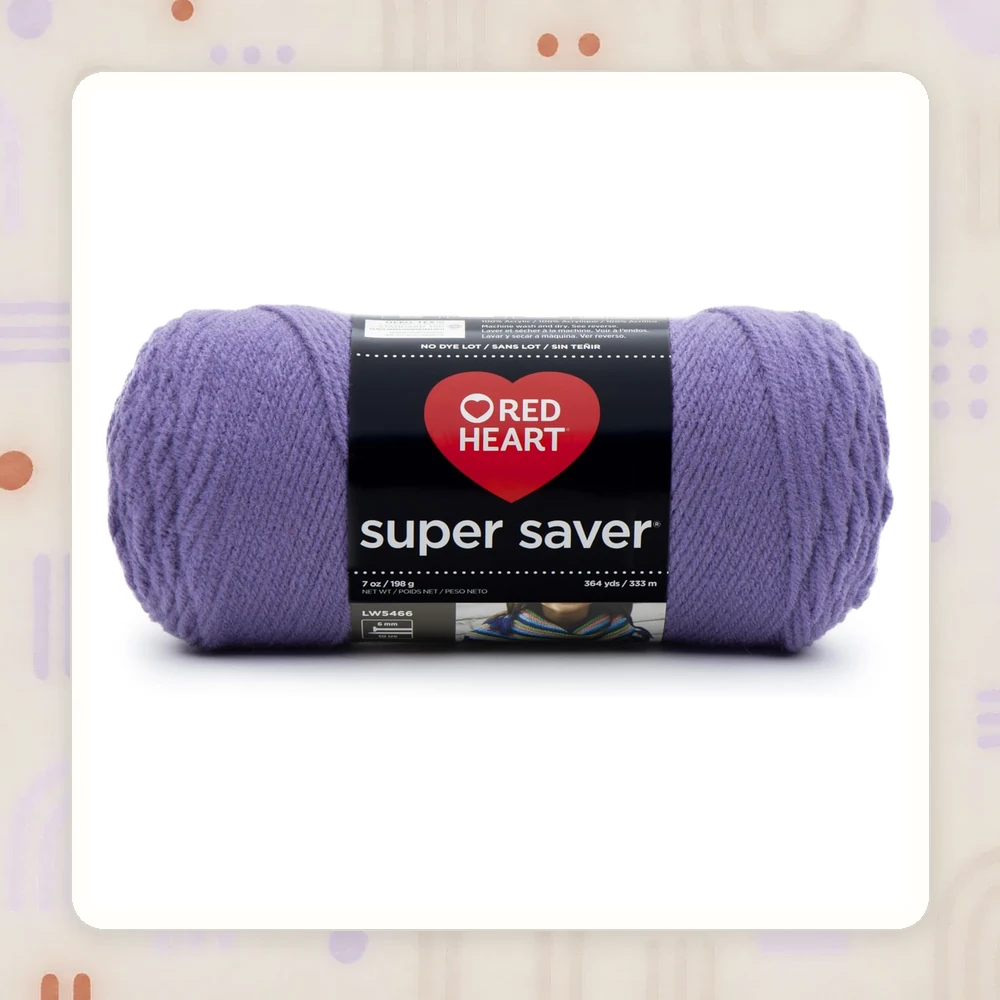
Acrylic yarn · color variant
Red Heart Super Saver Yarn, Lavender
A skein example for a setup that winds yarn onto a cone before tufting.
- Manufacturer-listed size
- 198 g / 7 oz for solid colors
- Fiber
- 100% acrylic
Check before buying: Confirm the selected Lavender color and package variant. The maker’s skein specifications do not establish fit for every tufting gun.
Yarnspirations lists the Red Heart Super Saver Lavender specifications.
What should you read next?
- Estimate yarn from a sample before buying for a full rug.
- Choose tools by the job before adding a winder or feeder.
- Review the beginner supply checklist and keep optional tools for later.
Yarn winding and feed FAQ
Do I need to wind every skein into a cone?
No. A prewound cone can feed directly. Tuft the World’s yarn guide recommends winding a ball, skein, or hank onto a cone when a smoother feed is needed; follow the instructions for your yarn and gun.
How far should a yarn feeder sit from the gun?
Tuft the World’s tangling guide suggests 3–6 feet as a starting range, then adjusting if yarn piles up or pulls with drag. Check your machine’s threading diagram too.
Do multiple strands have to come from separate cakes?
No universal rule covers every yarn and gun. Tuft the World’s yarn guide describes feeding several strands from a multi-cone stand or rewinding them together onto one cone; follow the strand count and threading path for your machine.