 Rug tufting field guides
Materials · Yarn
Which yarn works in a tufting gun, and how much do you need?
Check yarn against your gun manual first. For quantity, weigh a sample made with your yarn, strand count, and pile height, then use the calculator to scale it to your design.
Last reviewed: October 14, 2026.
How do you estimate yarn for a tufted rug?
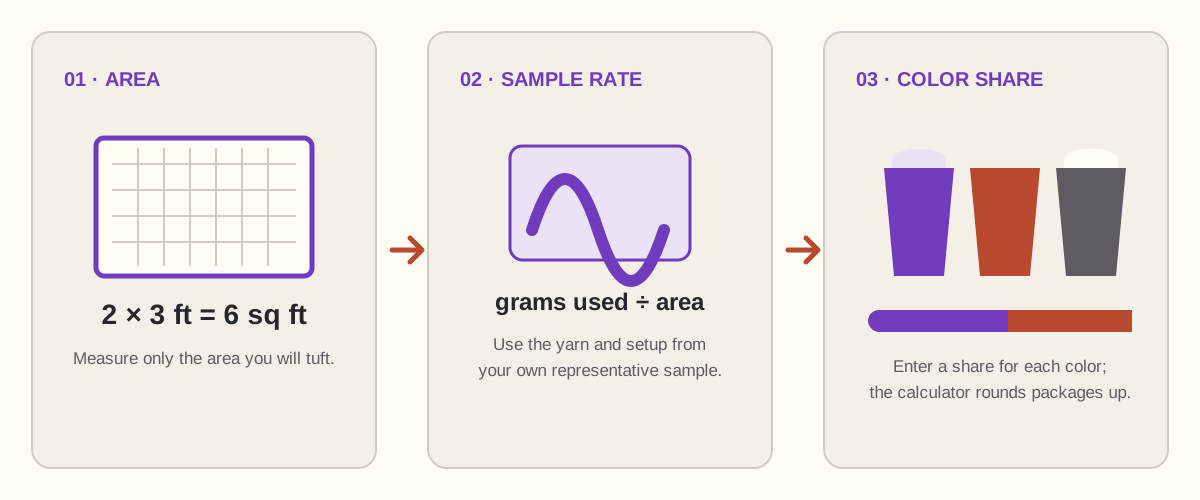
Weigh a sample made with the yarn and setup you plan to use, then scale that amount to the rug's area.
Yarn use changes with the yarn, pile, row spacing, and machine settings. A published average cannot account for all of those choices, so use the calculator with your own sample before ordering for a project.
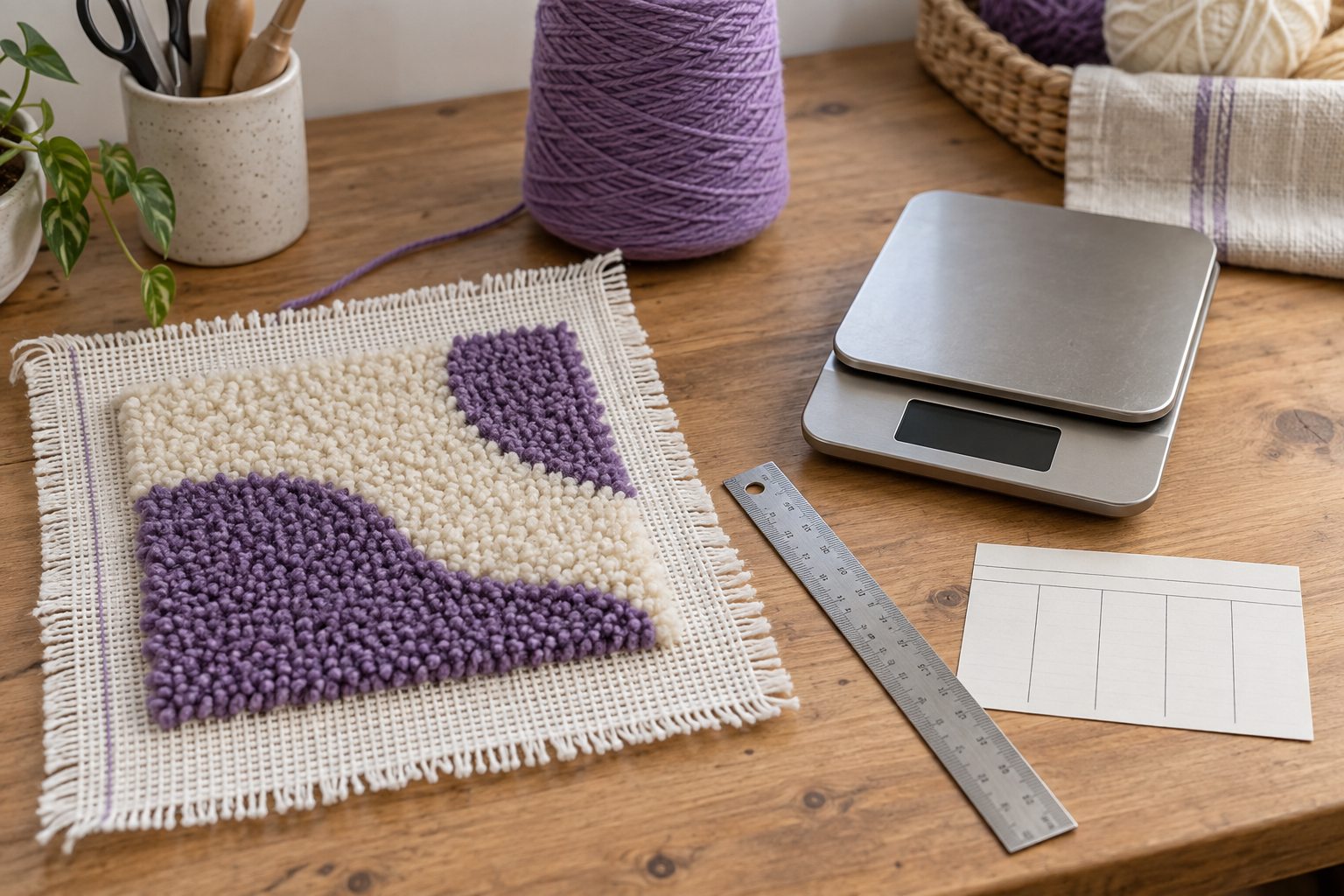
Weigh the yarn supply before and after tufting. That gives the sample's yarn use without including the cloth. If you change the yarn or setup, make a new sample.
A color-specific yarn option
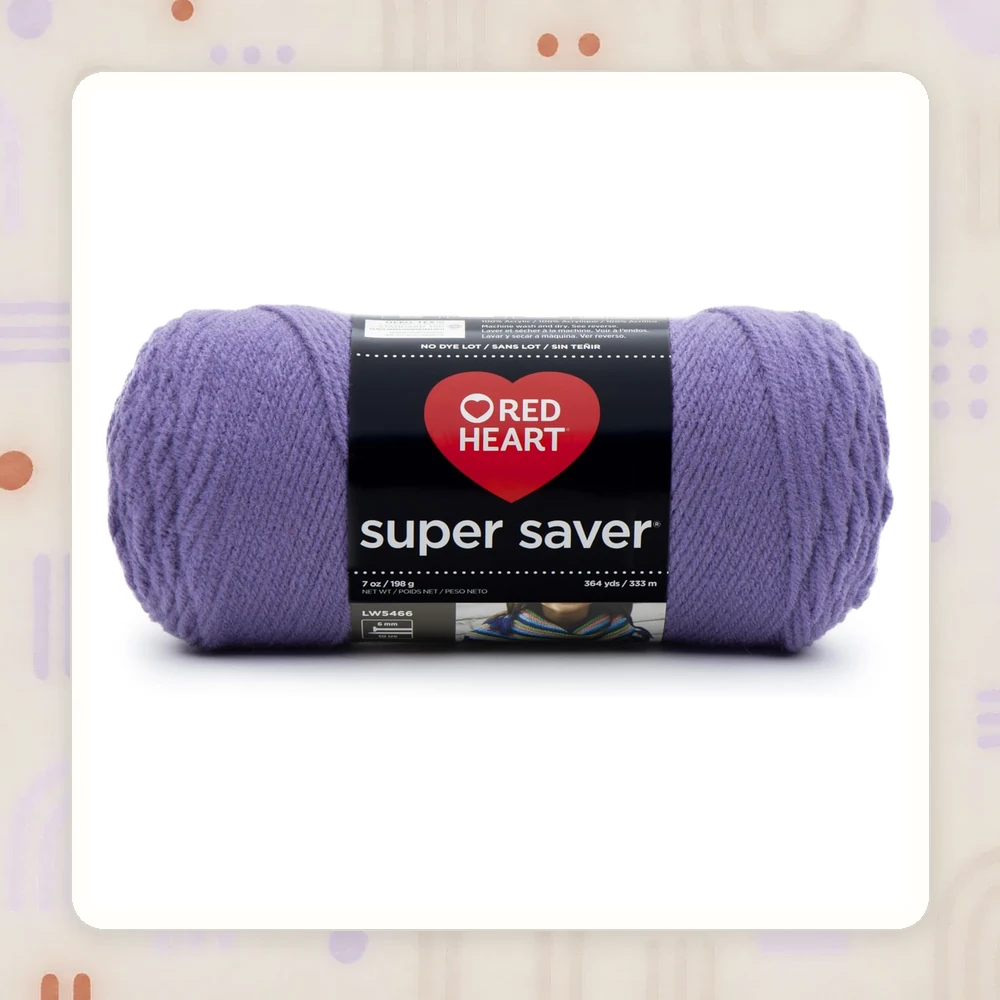
Yarnspirations lists Super Saver as 100% acrylic, worsted weight, size 4, and includes Lavender among its colors. Check the selected package label before entering its weight in the calculator.
Acrylic yarn · color variant
Red Heart Super Saver Yarn, Lavender
An acrylic yarn option when you want to choose a specific color and weight.
- Material
- Acrylic
- Variant
- Lavender
Check before buying: Color and pack details vary by child variant. Keep yarn quantity separate from the cloth-area calculation until you have a measured sample.
Where are you in the project?
- Before buying yarn: tuft and weigh a sample, then calculate the planned area and color shares.
- Choosing fiber or weight: check the gun manual and feed a short run through the needle before buying a large amount.
- Solving feed stops: start with an overhead path and check for snags before buying a handling tool.
How do you measure a yarn sample?
- Tuft a 10 × 10 cm square with the yarn, strand count, pile height, and row spacing you plan to use.
- Weigh the cone or ball before and after tufting so the cloth weight does not enter the math.
- Trim or carve the sample the way you plan to finish the rug. Weigh the offcuts if you want to estimate that waste.
- Record the machine, pile setting, strands, yarn, grams, and date with the result.
- Enter the sample dimensions and grams in the calculator. Its dimensions use inches; a 10 × 10 cm sample is about 3.94 × 3.94 in. If a setting changes, measure again.
A larger sample averages out the edges, which can be messier than the middle.
Check the yarn label and gun manual
Fiber and weight describe the yarn; they do not establish that it will feed through every tufting gun. Check the manual or support page for your exact machine, then confirm the yarn moves freely through its needle.
Yarnspirations lists Red Heart Super Saver as worsted weight, size 4 and 100% acrylic, with Lavender among its colors. Those are yarn-line details, not a compatibility promise for a particular gun.
Use a short run on scrap cloth before committing the full project. If yarn drags, jams, or pulls free, check the machine instructions and cloth setup before changing multiple things at once.
Use the sample-based yarn calculator
Enter a measured sample, the planned tufted area, a waste allowance, package weight, and color shares. The calculator estimates grams and rounds package counts up per color.
Formula: sample yarn ÷ sample area × planned tufted area × (1 + waste allowance). Package counts round up per color. This estimates yarn used by a measured sample; it does not predict pile height, strand count, trimming loss, or a manufacturer's package yield.
What yarn weight works in a tufting gun?
Follow the maker's guidance for the exact gun. If it does not name a yarn weight or strand count, check a small sample and make sure the yarn passes through the needle without force and stays in the cloth.
A yarn category such as worsted or DK can help compare labels, but it does not replace the machine manual or a fit check with the exact yarn.
Acrylic or wool for a tufted rug?
Start with the yarn maker's fiber and care information, then consider where the finished piece will live. Fiber alone does not determine how a backed rug wears or how it should be cleaned; the pile, adhesive, backing, and care instructions matter too.
Red Heart Super Saver is an acrylic option. Its yarn label describes the yarn, not a finished rug after adhesive and backing are added. See the finishing guide before choosing care instructions for the completed piece.
Cone or skein: which feeds better?
A cone feeds continuously and holds more yarn, which can mean fewer stops. Skeins work too; wind one into a ball or cake so yarn comes off without tangling. A Batting compares the two formats.
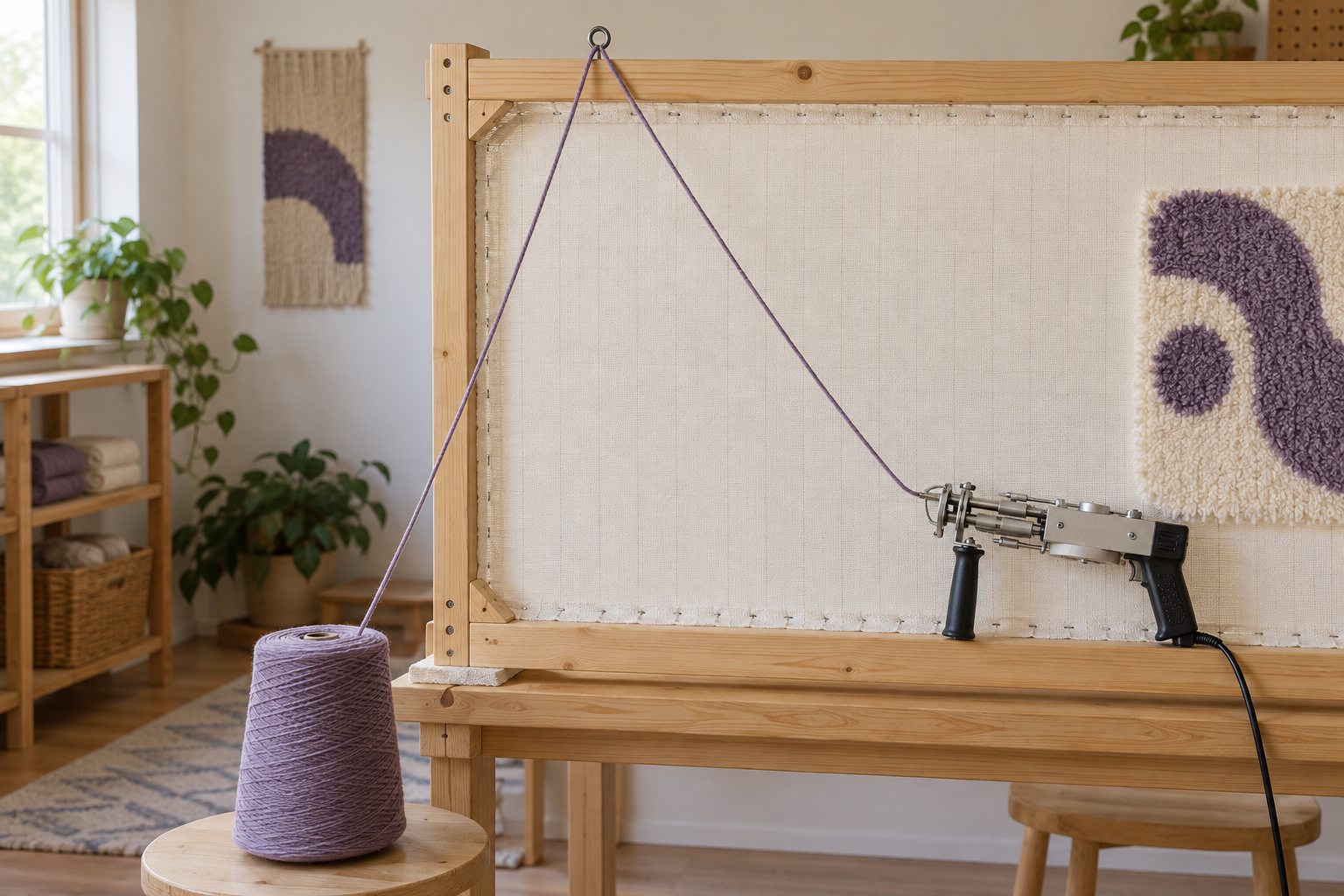
Whichever you use, feed the yarn from above the frame. Tufting Pal recommends an overhead path; makers describe the same fix for jerky feed on r/Tufting. A hook or eye screw at the frame top is enough to start; a dedicated feeder is optional. For the full winding steps, see our yarn winding and overhead feed setup guide.
Why does my yarn keep breaking or pulling out?
Check the feed and setup before changing yarn. Work through these one at a time:
- Threading path. Re-thread the full path, including the guide.
- Drag before the gun. Check for snags at the cone, an unwound skein, or yarn rubbing a frame edge.
- Cloth tension. Over-tight yarn can snap; loose cloth can let loops fall out.
- Speed. Moving faster than the gun feeds can pull the yarn tight.
- Needle. A burr can fray yarn. Inspect the needle and follow the maker's maintenance instructions.
- The yarn itself. Weak or loosely spun yarn can break. Try another only after checking the feed and machine setup.
If loops pull out, look at yarn thickness and cloth tension first. If clearing feed drag still leaves skipped stitches or dropped loops, use the gun and cloth troubleshooting guide before changing machine settings. For other gun questions, see the tufting gun guide. See TuftingTutorials' breakage guide and UK Tufting's troubleshooting guide for additional checks.
When should you wait before ordering?
Wait if you have not measured a sample, do not know the color share, or have not checked that the yarn feeds through your needle. A yarn winder is optional; no verified winder listing is linked on this page.
What should you read next?
Confirm cloth area first, then choose adhesive by the backing job and keep optional handling tools separate from the yarn estimate.
Continue to cloth fit or adhesive jobs.
Tufting yarn FAQ
How do I estimate yarn for a tufted rug?
Tuft a sample with your project yarn and setup, weigh what it uses, and scale that amount by planned area in the calculator. Remeasure if you change the yarn or setup.
Will Red Heart Super Saver fit every tufting gun?
No. Yarnspirations lists Super Saver as worsted weight, size 4 and 100% acrylic, but those details do not establish fit with every machine. Check your gun manual and try a small run on scrap cloth.
How many strands should I feed through my gun?
Follow the manual for your exact machine. If it does not specify, check that the yarn moves freely and holds in a short scrap-cloth sample before planning a project.
Do I need a yarn winder?
No. A winder is optional; what matters is a feed path that does not snag or drag yarn into the gun.