 Rug tufting field guides
Materials · Backing and labels
Which temporary spray or iron-on adhesive works for tufted rug backing?
Use repositionable fabric spray to hold felt while you work, then finish with stitching or a permanent adhesive whose label covers the materials. Iron-on web suits small, flat jobs like woven labels; it is not a load-bearing seam.
Last reviewed: October 30, 2026.
Temporary and permanent bonds do different jobs
A temporary spray keeps a backing layer in position while you line it up and smooth it. It does not secure a finished rug for handling.
Iron-on web joins small, flat fabric pieces with heat. For a rug backing that will be handled, add stitching or use a permanent adhesive rated for the exact materials and use. See the backing guide for how the layers fit together.
Use repositionable spray to hold felt flat
- Mask the yarn, protect the work surface, and test the spray on an offcut.
- Place the felt on the protected surface and apply a light pass of temporary spray as its label directs.
- Lay the felt onto the rug backing and smooth from the center out so wrinkles move toward the edges. Leave room to adjust it before adding the final hold.
Keep the spray off the pile. Overspray can leave residue, and temporary spray is only for positioning; stitch the layer or use a compatible permanent adhesive afterward.
Use iron-on web for labels and small patches
- Cut the web to the flat area you need to join.
- Work from the backing side with a pressing cloth and follow the maker's heat and timing directions.
- Keep the iron away from the pile, and test the fabric stack before pressing the finished rug.
HeatnBond Lite is sewable. Add stitching when the label or patch needs a lasting hold; do not use fusible web as a load-bearing seam.
For the full repair steps, see how to patch a hole in tufting cloth. For cloth types and backing support, see the primary cloth guide before covering a damaged area.
Choose a permanent option for a piece that will be handled
A contact adhesive may suit a backing bond when its current label names both surfaces and the intended use. Test the full fabric stack on an offcut, and follow the product's application, ventilation, and cure instructions.
Strength alone does not tell you whether an adhesive suits your materials and setting. The adhesive guide explains the difference between tuft-locking glue and a secondary backing bond.
Compare the backing and label options
| Option | Hold | Best use | Risk or limit |
|---|---|---|---|
| Odif 505 temporary fabric spray | Temporary positioning | Keep felt in place while aligning it | Not a finished bond; mask the pile against overspray |
| HeatnBond Lite iron-on web | Fusible; stitch where the join needs lasting hold | Woven labels and small, flat patches | Heat the backing side only; not for load-bearing seams |
| 3M Super 77 Low VOC | Spray bond for uses named on its label | Permanent spray bond for materials and settings allowed by the maker | 3M limits it to industrial or occupational use, not consumer sale or use |
| 3M Hi-Strength 90 | Stronger permanent bond for uses named on its label | Permanent backing bond when the exact application is permitted | 3M limits it to industrial or occupational use, not consumer sale or use; it is not repositionable |
For a floor rug, choose the felt and final backing method for the surface it will sit on. The edge and non-slip backing guide compares those finishing choices.
Protect the pile and ventilate
Mask the yarn and nearby surfaces before spraying, then use each can only in the setting its label allows. Follow the label and safety data for ventilation, protective equipment, application, and drying. If your workspace cannot meet those instructions, use a non-spray method.
What to buy
For positioning felt, start with a temporary fabric spray. For a woven label or small patch, choose iron-on web and stitch it when the join needs extra hold. Buy the larger web roll only if you have a batch of small pieces to finish.
The 3M sprays below are product references for industrial or occupational settings; 3M says they are not for consumer sale or use. Skip them for a home project and follow the maker's label for any adhesive you consider.
Odif 505 temporary fabric adhesive spray
Use a light pass to hold felt while you align and smooth it. It will not secure the finished backing. You can still smooth the layer from the center out.
Best for: positioning felt before its final attachment.
Skip if: you need the adhesive to hold during handling.
HeatnBond Lite iron-on adhesive web
Use the 5.25 yd roll for labels and occasional patches; the 35 yd roll is the larger option for production batches. Follow the maker's directions and stitch when the bond needs to last. It joins fabric from the backing side, away from the pile.
Best for: Woven labels and small, flat patches.
Skip if: The join must carry a load or you cannot keep heat away from the pile.
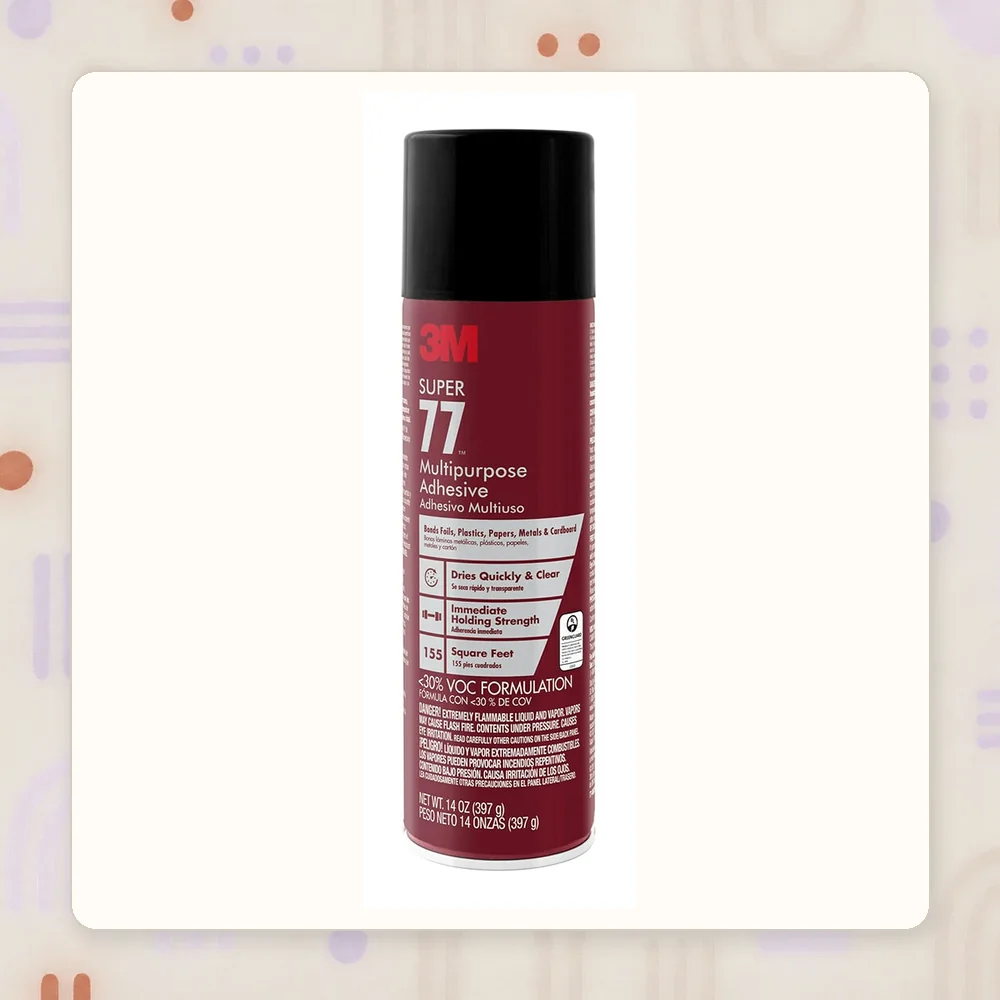
3M Super 77 Low VOC spray adhesive
Use it only where the current label covers the materials and setting. It is not for temporarily positioning felt. It bonds the layers in place rather than holding them temporarily.
Best for: permanent spray bonding where the maker allows it.
Skip if: you are working at home; 3M excludes consumer sale or use.
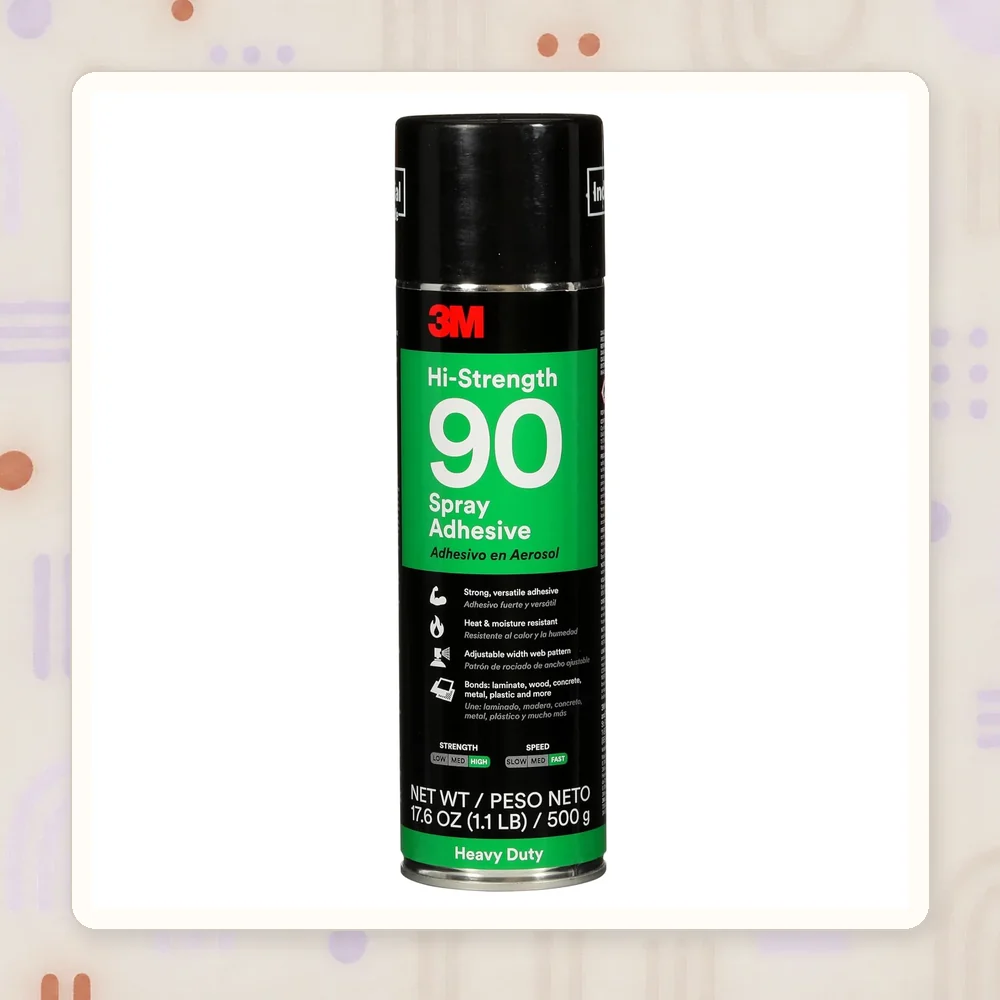
3M Hi-Strength 90 spray adhesive
Check that the label covers both materials and your setting. This is a permanent bond, not a repositionable hold. Use it when the layers need a fixed bond.
Best for: permanent spray bonding where the maker allows it.
Skip if: you are working at home; 3M excludes consumer sale or use.
Non-slip dotted felt
Use it as the felt layer in the backing examples when a grip layer fits the rug and floor. Check the complete backing stack before attaching it. Test it with the adhesive on an offcut before attaching it.
Best for: a grip layer on a floor rug.
Skip if: the piece is a wall hanging or needs no extra backing layer.
Frequently asked questions
Is temporary spray strong enough to hold a rug backing for good?
No. It is for positioning. Add stitching or a permanent adhesive.
Can I iron a woven label onto a rug?
On the backing side, yes, with low heat and a pressing cloth. Keep the iron off the pile.
Does spray adhesive stain yarn?
Overspray can leave residue. Mask the pile when you spray.
Do I need ventilation?
Yes. Follow each can's label.
Is iron-on web washable?
Check the maker's care notes, and still treat large rugs as spot-clean only.