 Rug tufting field guides
Tools · Rug detailing
How do you carve crisp lines between colors in a tufted rug?
Leave a gap between colors, trim it on the frame with small curved scissors, and carve a shallow groove after the backing cures. Bevel the edge instead of cutting vertically to define it without thinning the pile.
Last reviewed: October 30, 2026.
Why colors blur together
When color rows meet, the pile can lean into the neighboring color. Trimming then exposes fibers from both sides, and the boundary looks soft.
A narrow gap gives you room to separate the pile before you carve. If there is no gap, the blade has to cut through yarn that should stay with one color or the other.
The row-gap rule
Leave about two thread rows between colors as a common starting point. Adjust the space for your yarn thickness, then test the same layout on a scrap before you tuft the full design.
Check the gap after trimming. It needs to leave enough pile on both sides for a clean edge without exposing the backing.
Four stages from gap to groove
- Tuft with a gap: Leave space between color fields with the tufting gun.
- Trim on the frame: Clear loose yarn from the gap while the cloth is stretched, using small curved scissors.
- Back the rug: Apply the backing and let it cure before cutting the pile. Follow the backing materials' instructions.
- Carve the edge: Cut a shallow V-groove along the color boundary with a rug carver, or scissors for a small piece.
Choose backing for the rug and adhesive you are using. The backing guide covers the steps before detail carving.
Trim between colors on the frame
- Keep the cloth stretched and use small curved scissors to remove loose yarn from the gap.
- Work in short cuts, leaving the neighboring pile intact and keeping the blades clear of the cloth.
- Trim before backing so you can see and separate the rows. Do not carve a deep channel while the rug is still on the frame.
Bevel angle for the carved edge
- A 45-degree V-groove is a common starting point. Make a shallow pass along one side of the gap, then the other, so the two cuts meet without taking a vertical slice out of the pile.
- Use a shallower angle on short pile. Take off a little at a time and check the edge before making another pass; cutting too deep can thin the pile beside the line.
Scissors, carver, or flat shearer
Curved scissors work for short lines and small pieces. A rug carver makes long grooves easier to follow, while a flat shearer levels pile height across a surface. A shearer does not cut the groove or bevel described here.
See the carver guide for the difference between trimming, carving, and leveling, then compare the scissors, carver, and flat planer by job.
Common mistakes
- Cutting too deep: make shallow passes and stop when the color boundary reads clearly.
- Carving before the backing cures: wait until the backing has cured so it locks the cut yarn in place.
- Skipping the first trim: loose or uneven pile can make a clean groove hard to follow.
- Using a steep angle: start with a shallow bevel, especially on short pile.
Once the carving is done, see how to stop a tufted rug from shedding, clean it, and ship it. The finishing sequence shows where trimming and backing fit.
What to buy
Choose scissors for trimming in the gap, a carver for long grooves, or a shearer for broad leveling.
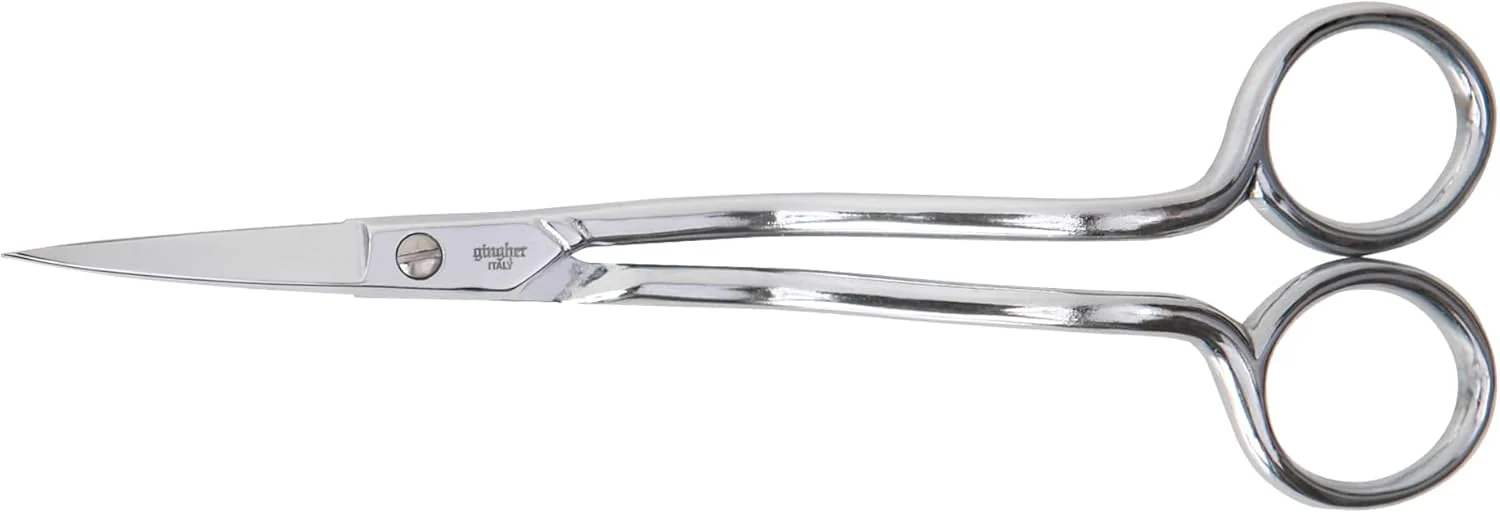
Gingher 6-inch double-curved scissors
Use these to trim loose yarn in the color gap while the rug is on the frame. Make small cuts so you can keep the blades clear of the cloth.
Best for: trimming loose yarn in a color gap with small, controlled cuts.
Skip if: you need to carve long grooves or bevels.
500W flat shearer (CP-I)
Use a flat shearer to level pile across a broad area. It does not carve grooves or bevels.
Best for: leveling pile across a broad area.
Skip if: you need to carve grooves or bevels.
Chumia 200W electric rug carver
This carving clipper has adjustable speed and guide combs. Use it after the backing has cured, and follow the tool instructions. It cuts grooves and bevels; a flat shearer only levels pile.
Best for: long lines or large pieces where you want a powered tool.
Skip if: curved scissors suit the size of your piece or you need fine lettering-level control. Practice the angle on a scrap first.
Frequently asked questions
How big should the gap between colors be?
About two thread rows is a common starting point. Test on a scrap with your yarn.
Do I carve before or after backing?
After the backing has cured, so the cut yarn is locked in.
Can scissors do the job without a carver?
Yes, for small pieces. A carver saves time on long lines.
Why does my carved edge look ragged?
Check for a dull blade, a steep angle, or pile you did not trim first.
Is a flat shearer the same as a carver?
No. A shearer levels pile height; a carver cuts grooves and bevels.